



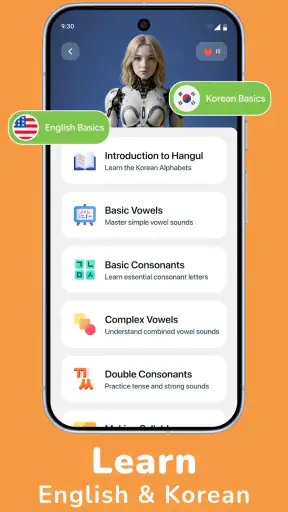
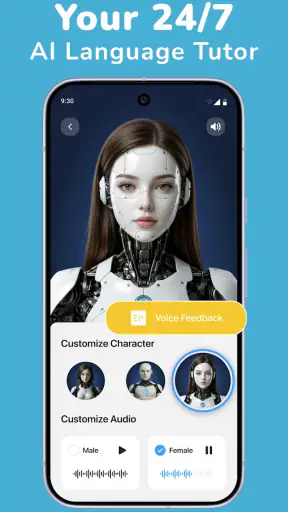
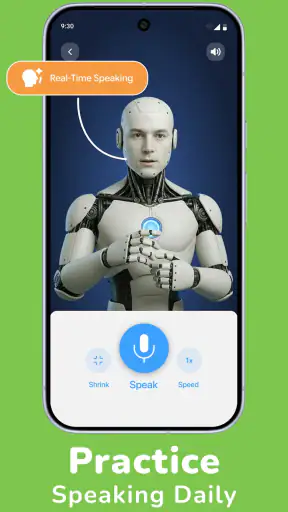
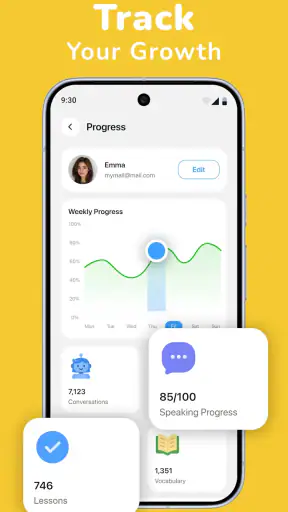
I approached Fluzy: Learn Language with AI as a language-learning companion rather than a replacement for a full course. Its promise is attractive: use AI chat, speaking practice, and English lessons to make study feel more natural. After spending time with it, my impression is that the app is most convincing when I treat it as a low-pressure way to keep language practice present in my day, not as a complete academic program.
That distinction matters. Many language apps are excellent at getting people through a first session, then gradually become another icon they ignore. Fluzy has a better chance of surviving that drop in novelty because conversation and speaking practice can fit around real situations. Still, the long-term value depends heavily on whether you build a routine and whether you need a structured path with clearly measurable progression.
From an appealing first week to a sustainable language habit
Why the opening experience feels approachable
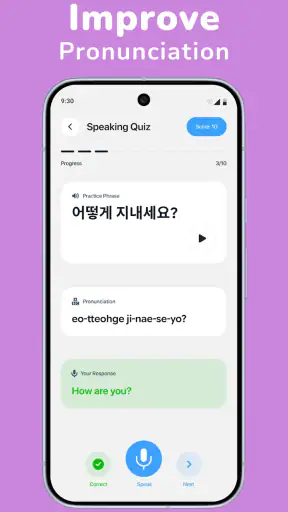
The strongest first impression comes from the conversational idea. Instead of relying only on isolated vocabulary cards or fixed multiple-choice exercises, Fluzy places AI chat and speaking practice near the center of the learning experience. I find that approach less intimidating for learners who know words on paper but hesitate when they have to produce a sentence.
A first week with this kind of app works best when I keep the goal modest. I would use a short chat after breakfast, try a speaking exercise during a walk, and return to an English lesson later rather than attempting a long study session. That rhythm makes the app feel more like a useful daily tool than homework. It also exposes a common weakness early: recognizing an answer is much easier than creating one without help.
The conversational format is particularly useful for rehearsing ordinary moments. I can imagine preparing for a hotel check-in, practicing how to introduce myself at work, or trying to explain a simple problem before a trip. These scenarios are more memorable than disconnected word lists because they give vocabulary a reason to exist. The best result is not perfect fluency; it is reduced hesitation.
At the same time, I would not mistake a friendly AI exchange for a complete speaking partner. A learner still needs to pay attention to sentence accuracy, pronunciation, and whether a phrase sounds natural in context. If I simply accept every suggestion and move on, the interaction can become passive. My practical tip is to pause after each response and say the improved sentence again without looking. That small extra step turns a chat into retrieval practice.
What makes the app useful beyond novelty
Fluzy comes from Mall Collections and sits in the education category, with a free entry point and an Everyone age rating. The current release is version 1.4.0, and it runs on Android 8.0 or later. Those details make it accessible to people using older compatible devices, although the experience will naturally depend on the phone, microphone, and connection available during use.
The app’s public reception also suggests that it has reached a meaningful audience: it has an average rating of 4.5 from around 18 thousand ratings and more than five million installs. I see that as a useful signal of visibility, not proof that it will suit every learner. Language study is personal. Someone who enjoys open-ended practice may appreciate Fluzy more than a person who wants a rigid syllabus and a fixed sequence of tests.
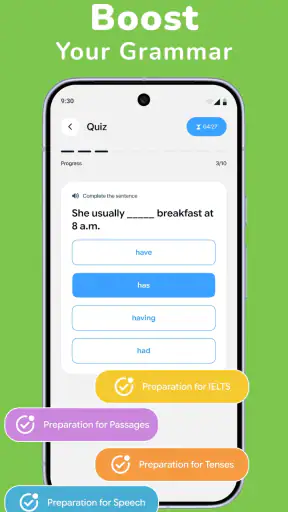
One non-obvious advantage of AI conversation is that it can help me identify the kind of mistake I repeatedly make. For example, I may understand a tense lesson but keep avoiding that tense in speech. A chat gives me a reason to use it, while a speaking prompt reveals whether I can produce it quickly. I recommend choosing one narrow target before starting a session, such as past events, polite requests, or questions. Without that focus, the flexibility can turn into unfocused conversation.
How it compares with familiar alternatives
Compared with flashcard apps, Fluzy is better suited to active production. Flashcards are usually more efficient for memorizing a large set of words, especially when I want spaced repetition and a clear review queue. Fluzy is more valuable when I need to turn known vocabulary into sentences and spoken responses.
Compared with a traditional language course, it is lighter and easier to fit into spare moments, but it may feel less comprehensive. A formal course normally gives me an ordered curriculum, explanations that build on one another, and a clearer sense of what comes next. Fluzy’s flexible AI format is a strength for casual practice and a weakness for learners who need external structure.
Compared with a private tutor, the app is obviously more convenient for quick repetition, but it cannot provide the same human judgment, cultural nuance, or accountability. I would use Fluzy to prepare for a lesson, reinforce what a tutor taught me, or keep practicing between sessions. I would not rely on it alone if I needed detailed correction for an exam, professional presentation, or high-stakes interview.
The hidden cost of flexible practice
Fluzy is free to download and use at its basic level, while in-app purchases range from $7.99 to $199.99 per item. That broad range is important for anyone deciding whether to make it a regular study tool. I would begin with the free experience and ask a simple question: does the app actually make me practice more consistently than my current method?
That test is more useful than judging the app after one entertaining conversation. If the free access already helps me speak several times a week, a paid option may be easier to justify. If I only open it when I feel motivated, paying will not solve the habit problem. The highest-priced option deserves especially careful thought, because long-term language progress comes from repeated use, not from unlocking a purchase once.
Another practical issue is the difference between practicing English and learning a language from absolute zero. The store positioning emphasizes English lessons, so I would approach the app primarily as an English-learning companion. A learner seeking a broad, multi-language curriculum should compare the lesson coverage and progression with a dedicated course before committing. Fluzy may be a good fit for English practice without being the right single platform for every language goal.
What happens after the first month
After the initial excitement fades, the app needs a job in my routine. I would assign it three roles: a short speaking warm-up, a place to test new phrases, and a fallback activity for days when I cannot complete a longer lesson. That division prevents every session from feeling identical and gives me a reason to return even when I am tired.
A useful monthly workflow would begin with a personal phrase list outside the app. After a chat or lesson, I would write down a few expressions I genuinely want to use, then bring them back into later conversations. This is more effective than collecting every unfamiliar word. The trade-off is that Fluzy may not do all the organization for me; I need to create some of the continuity myself.
I would also rotate situations instead of repeating the same comfortable topic. One day could focus on making plans, another on describing a recent event, and another on asking for clarification. This exposes gaps that a predictable routine can hide. If I always practice introductions, I may feel fluent while remaining unprepared for explanations, disagreements, or follow-up questions.
Speaking practice becomes more valuable when I record a simple before-and-after comparison for myself. I can answer the same prompt at the beginning of the month and again later, listening for fewer pauses, clearer sentence endings, or more varied vocabulary. This is not a formal progress measurement, but it gives recurring use a visible purpose. Without some personal benchmark, AI practice can feel productive even when I am only repeating familiar material.
Where the maintenance burden appears
The maintenance burden is not mainly technical; it is motivational and organizational. Fluzy lowers the effort needed to start, but I still have to decide what to practice, notice recurring errors, and return often enough for those errors to matter. That is a fair exchange, yet it means the app will not automatically create discipline for someone who has struggled with every previous language tool.
My recommendation is to set a minimum session that feels almost too easy. A few spoken answers or one focused chat can preserve the habit on a busy day. When I have more time, I can extend the session. This approach is better than setting an ambitious daily target, missing it twice, and abandoning the app altogether.
I would keep a small “mistake of the week” note as well. If I repeatedly confuse word order or avoid a particular tense, I can make that the next session’s theme. This is one of the most useful ways to turn an open-ended AI tool into a personal curriculum. The app supplies interaction; I supply the memory of what needs work.
There is also a device-related maintenance point. Speaking practice is only worthwhile if I can use the microphone comfortably and speak aloud without feeling rushed or embarrassed. At home, that may be easy. On public transport or in a shared workplace, silent lessons may be more practical. I would alternate between chat and speaking rather than treating audio practice as mandatory every time.
What may cause fatigue over time
AI conversation can become repetitive if I ask for the same kind of exchange each day. The novelty of receiving an immediate response wears off, especially when the prompts stay broad and predictable. To avoid that, I would bring specific tasks into the chat: explain a recipe, negotiate a change of plans, summarize a short article, or ask for three ways to say the same idea at different levels of formality.
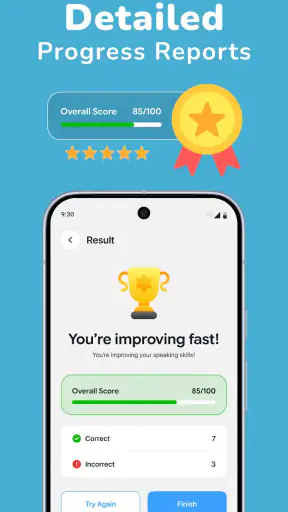
Another source of fatigue is uncertainty about progress. A conventional course often gives me units, checkpoints, and a visible finish line. Fluzy’s natural conversation style may feel more enjoyable, but enjoyment alone does not tell me whether my grammar, listening, or pronunciation is improving evenly. Learners who need certificates, exam preparation, or a detailed syllabus may become frustrated unless they pair the app with another resource.
There is a subtle mental load in evaluating AI feedback, too. I should not accept every correction without thinking about the context. An alternative phrase may be useful rather than strictly necessary, and a sentence can be grammatically correct while sounding too formal for a casual conversation. The learner still needs judgment. This is not a reason to avoid the app, but it is a reason to treat its responses as guidance rather than an unquestionable teacher.
The purchase structure can also affect motivation. Once an app offers optional items from $7.99 up to $199.99, I may feel pressure to decide whether I am using the “right” level of access. My advice is to postpone that decision until the routine proves itself. Fluzy earns a place through repeated usefulness, not through the size of the package I choose.
Who should use it, and who should choose something else
I would recommend Fluzy to an English learner who understands basic material but needs more courage producing sentences. It is also a good match for travelers, busy adults, and students who want extra speaking opportunities between classes. People who dislike rigid drills may find the AI format easier to revisit because each session can respond to a different need.
I would be more cautious about recommending it as the only resource for a complete beginner. Someone starting from the very basics may need a carefully ordered explanation of sounds, sentence structure, and foundational vocabulary before open-ended conversation becomes comfortable. Fluzy can support that learner, but a structured textbook, class, or course may provide the clearer foundation.
I would also point advanced learners toward a more specialized option if their goal is precise professional writing, exam scoring, or nuanced pronunciation coaching. Fluzy can help rehearse ideas and maintain fluency, but high-stakes goals usually benefit from expert human feedback and materials designed around the target assessment or profession.
For families, the Everyone rating makes the app broadly approachable, but I would still guide younger learners rather than leaving them to choose every topic and interpret every correction alone. The most productive use is shared: a parent or teacher can suggest a situation, then ask the learner what new phrase they actually used. That turns screen time into a conversation about learning.
My long-term verdict
Fluzy: Learn Language with AI earns lasting space on my device when I use it as a maintenance tool: something that keeps English active between formal lessons, supplies low-pressure speaking practice, and helps me rehearse situations I might otherwise avoid. Its biggest strength is convenience with a conversational feel. Its biggest weakness is that flexibility can leave the learner responsible for structure, review, and judging progress.
The app has a strong enough first-week appeal to get started, but its real test is the fourth week, when the novelty of AI chat has faded. I would keep it if I were opening it several times a week, recycling phrases, and noticing that speaking felt less effortful. I would move to a more structured alternative if I kept wandering through conversations without a clear learning target.
For me, the sensible approach is to begin free, choose one practical speaking goal, and create a small personal review loop around the lessons. That makes the app more than an entertaining chat window. Its recurring value comes from turning spare minutes into deliberate language use. Used that way, Fluzy is a worthwhile education app for ongoing English practice, though not a universal substitute for a complete course, tutor, or disciplined study plan.


